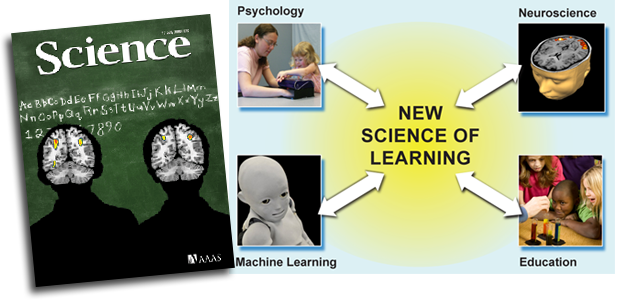
The Learning in Informal and Formal Environments (LIFE) Center was one of the first four Science of Learning Centers to be funded in the Fall of 2004. LIFE is a an interdisciplinary collaboration between learning scientists at the University of Washington, Stanford University, SRI International, and other institutions across the country.

Recent Center Activity

LIFE ethnographic methods workshop to be held at ICLS 2008

April 2nd, 2008

LIFE researchers Leah A. Bricker, Tiffany R. Lee, Sheldon Levias, Laurie McCarthy, Véronique Mertl, Carrie Tzou, and Heather Toomey Zimmerman will collaborate to present an ICLS 2008 pre-conference workshop titled Using ethnography to further understandings of learning in everyday settings.

The workshop will be held on Tuesday 24th of June from 2:00 to 5:30 p.m. in Utrecht, the Netherlands.
To register, go to: http://www.isls.org/icls2008/. Workshop fee payable to ICLS 2008: € 30.

Workshop Summary: This workshop will give researchers an opportunity to interact with learning scientists employing ethnographic methods. The workshop presenters will use their own ethnographic research—leveraging thousands of hours of fieldwork—as an exemplar in order to describe this methodological approach, share “tricks of the trade,” and discuss challenges associated with conducting cognitive ethnographic research. Workshop activities include presentations of theory and method, demonstrations, and discussions.

For a complete workshop description, click “Read the rest of this entry” below. Click for pdf of the workshop description (124 kb size).

Read the rest of this entry »

CONFERENCE PAPER: Developing scientific practices

March 31st, 2008

Developing Scientific Practices: Understanding how and when children consider their everyday activities to be related to science.

NARST 2008 Conference Paper

Heather Zimmerman, Philip Bell

University of Washington, College of Eductaion

Abstract: In this paper, our goal is to examine learner meanings for what counts as scientific practices and when learners’ own activities count as science-related in order to better understand science learning. We then seek to leverage children’s meanings for scientific practice to develop design principles to be used in building educational interventions in science domains to reach youth in ways that make sense to them. To accomplish these objectives, we analyze how and when a group of 10- to 12-year-old children from the same multiethnic, multilingual elementary school participate in various activities across settings. We create grounded accounts for the individual, social, and cultural meanings attached to children’s understandings of scientific practices to understand the influences on children’s decisions to continue or to discontinue their affiliations with science-related activities. We first share findings in the form of an inventory of what activities the children in our study participated in and when these activities counted as science. Second, we show through one case study of a child interested in animals how participation in multiple activities included a range of epistemic, materials and social influences. Finally, we discuss how a study of changing make up activities can show indicators that may influence future participation in science-related contexts to create a possible trajectory into academic science.

CONFERENCE PAPER: How Everyday Activities Influence Children’s Ideas About Health

March 31st, 2008

How everyday activities influence children’s ideas about health

NARST 2008 Conference Paper

Suzanne Reeve, Philip Bell

University of Washington, College of Eductaion

Abstract:  In this paper, we explore children’s meanings for the terms “healthy” and “unhealthy.” We argue that incorporating personal health into science education is not only fitting in terms of content and process domains, but also in line with recent calls for a focus on science literacy. We report on the results of a self-documentation task in which thirteen children were asked to photograph and write about the range of things they encountered in everyday life that they considered healthy and unhealthy. We present a brief review of results across the children, and then describe two in-depth case studies, focusing on the significant learning influences the children cite. The analysis shows how everyday experiences and activities can have great impacts on children’s health understandings, and suggests that such everyday understandings create opportunities for science educators to connect to and build upon.


Conference Paper: Shared Personal Histories as Backgrounds for Collaboration

March 25th, 2008

Shared Personal Histories as Backgrounds for Collaboration: Are They Important, and How Can They Be Observed?

AERA 2008 Conference paper

Susan Mosborg, John Bransford, Nancy Vye, Hank Clark

University of Washington, College of Education

Abstract. The authors explore the notion that shared personal history among long-standing work and learning teammates may affect collaborative problem solving in ways that are not fully captured by audio or video transcripts of their problem solving activities. A trio of researchers with a decade plus history of closely working together solved a collaborative design task in a laboratory setting. Think aloud transcripts and video data from the trio’s design session were analyzed inductively against a backdrop of findings from previous studies showing how undergraduates and professionals with several years experience in the workplace solved the same problem individually. After seeing the transcript data, the teammates in the trio each independently provided additional verbal commentary and annotation on the most salient video sections. The article presents a narrative account and themes of the trio’s problem solving approach, highlighting what was unstated but presumed common knowledge, and what helped and hindered the teammates individually and as a group. Conclusions address implications for the design of collaborative work and learning infrastructure, and for the value of bring the “participants’” perspectives into analyses of design.

2008 inter-Science of Learning Centers (iSLC) conference

March 18th, 2008

On February 8-10, 2008, the first annual inter-Science of Learning Centers (iSLC) conference brought together graduate student and postdoctoral scholars from the six NSF-funded SLCs: LIFE, CELEST, PSLC, SILC, TDLC, and VL2. This NSF-sponsored meeting was hosted by PSLC at Carnegie Mellon University.

LIFE islc presentation

114 SLC students and postdocs attended the event, as well as 7 invited international participants. The purposes of this meeting were to provide a common place for junior learning sciences researchers to meet each other, share their various approaches to investigating the shared topic of learning, and to begin conversations across the Centers to foster future collaborative efforts.

life posters islc

Through poster sessions, symposia presentations and methodology workshops, participants shared current work occurring in each of the Centers. In addition, LIFE representatives led workshops on using ethnographic methods in everyday settings, using virtual environments for teaching and learning, and incorporating diversity into research. Preparations for next year’s meeting is now underway; The LIFE Center will host iSLC 2009 on February 6-8, 2009, in Seattle, WA.

LIFE NSF Research Highlights — 2008 Collection

February 14th, 2008

2008 LIFE NSF Research Highlights are listed below by category for your reference.

Explorations of diversity and learning

Collaborations between Research and Practice

Early Development

Syntheses Across Research Areas

New Approaches to Assessment

Social Effects on Learning Processes

Learning in informal Settings

Research Highlight: Learning in and out of School in Diverse Environments: Life-wide, Long-long, and Life-deep Learning

February 14th, 2008

Author: James A. Banks and members of the LIFE Diversity Consensus Panel

Institutions: University of Washington and others.

Researchers: James A. Banks, Kathryn H. Au, Arnetha F. Ball, Philip Bell, Edmund W. Gordon, Kris D. Gutierrez, Shirley Brice Heath, Carol D. Lee, Yuhshi Lee, Jabari Mahiri, Na’ilah Suad Nasir, Guadalupe Valdes, Min Zhou

LIFE Diversity Consensus Panel

Description of Graphic Image: LIFE Diversity Consensus Panel

Project and Outcomes. The Center for Multicultural Education at the University of Washington and the LIFE Center established the LIFE Diversity Consensus Panel. The Panel’s goal was to develop a set of principles that educational practitioners, policy makers, and future researchers could use to understand and build upon the learning that occurs in the homes and community cultures of students from diverse groups. A major assumption of this report is that if educators make use of the informal learning that occurs in the homes and communities of students, the achievement gap between marginalized students and mainstream students can be reduced.

This reports consists of four major parts. Part 1, the Introduction, describes the educational implications of significant changes related to demographics and globalization that are occurring in the U.S. and around the world. Part 2 explicates life-long, life-wide, and life-deep learning and states why these concepts should guide learning inside and outside of schools and other educational institutions. Part 3, which constitutes the main part of this report, focuses on the four principles listed below. Part 4 provides conclusions and recommendations. This report also contains a checklist that educational practitioners can use as a tool to generate dialogue about the four principles identified by the LIFE Diversity Consensus Panel.

PRINCIPLES

1. Learning is situated in broader socio-economic and historical contexts and is mediated by local cultural practices and perspectives.

2. Learning takes place not only in school but also in the multiple contexts and valued practices of everyday lives across the life span.

3. All learners need multiple sources of support from a variety of institutions to promote their personal and intellectual development.

4. Learning is facilitated when learners are encouraged to use their home and community language resources as a basis for expanding their linguistic repertoires.
Learning is facilitated when learners are encouraged to use their home and community language resources as a basis for expanding their linguistic repertoires.

The report mentioned in this document is available online on the LIFE Center web site: http://life-slc.org/?p=498

Research Highlight: Diversity as a Research Construct: Learning, Culture, Language and Socioeconomic Status

February 14th, 2008

Investigators: Carol Lee (Northwestern University),Phillip Bell(University of Washington), Na’ilah Nasir (Stanford University), Nora Sabelli(SRI International)

Snapshot of the informal conversations

Description of Graphic Image:
Snapshot of the informal conversations around which the workshop was organized.

Project and Outcomes Description:
There’s no doubt that diverse cultural, linguistic and economic backgrounds affect how people learn. But how can diversity be consistently and appropriately addressed in research on learning?

Learning scientists recently tackled this problem and started to devise a framework to guide future work at a “Hot Topic” workshop hosted by the LIFE Center and Northwestern University researcher Carol Lee.

Terms like “diversity,” “community,” and “multilingualism” hide the various factors - like race and economic status - learning researchers attempt to quantify and control in their studies. That makes the research results less useful when others try to translate them into new ways of teaching.

It’s important that researchers understand the range and meaning of these variable factors so their findings are comparable and can be generalized to different situations. To make progress, they must agree on descriptions of cultural diversity and diversity based on economic and social status, language, race, ethnicity, and community resources.

At the interdisciplinary meeting, participants worked on a framework tied to an understanding of culture as fluid, changing, and rooted in social interaction. The framework will guide researchers’ work and help them examine and communicate their results. It also will challenge researchers to consider how culture, diversity and multiple language use is relevant to their studies, and will allow more careful data analysis.

Eventually, LIFE Center researchers hope to consider guidelines and definitions that spring from learning theory and account for the varying nature of diversity. They hope the workshop’s results will lead to more knowledge and have real effects on how people learn.

Research Highlight: Building Connections Between Research and Practice

February 14th, 2008

Organizers: Shirley Malcom, AAAS and ECO Board Chair of LIFE, and Nora Sabelli, LIFE.

Institutions: American Association for the Advancement of Science, SRI International, University of Washington and Stanford University

Researchers: John Bransford, Patricia Kuhl, Philip Bell, Reed Stevens (University of Washington); Roy Pea, Daniel Schwartz, Shelley Goldman (Stanford University)

Snapshots of the Question and Answer session and of the discussion

Description of Graphic Image:
Snapshots of the Question and Answer session and of the discussion: researchers John Bransford and Phillip Bell and Teacher Yvonne Brannum.

Project and Outcomes. Both teachers and researchers have insights about issues of human learning that are important to understand more deeply. Typically, however, there are few opportunities to connect the wisdom of practice with efforts by the research community.
To address these and other issues, an open conversation between researchers and teachers was organized by the Learning in Informal and Formal Environments (LIFE) Center and with the American Association for the Advancement of Science (AAAS). Six LIFE researchers were joined by a similar number of teachers from the District of Columbia area, chosen for their past collaborations with AAAS.

Everyone came together to share problems, techniques, knowledge and strategies and to break down the boundaries that limit how research is put into practice. The meeting format was unique, as it relied on questions based on teaching practices to “translate” between research questions and practice issues. The discussion identified implications for policy and for refining both research questions and classroom practice, focusing on issues of common interest such as research that leads to understanding the knowledge that students bring to school and the possible uses of homework to link parents with school.

An audience of researchers, faculty, policymakers, and others got a chance to ask questions and comment on the need for open conversations around research and practice.
Based on comments and requests from the audience, the LIFE center plans to follow the same format to continue the conversation in other meetings. Together, the teachers and researchers hope the discussion will drive new policies to support effective teaching and new research to improve learning.

Research Highlight: Building Connections between research and practice: LIFE Collaborations with a major School District

February 14th, 2008

Organizers: Bellevue School District, Bellevue Schools Foundation & LIFE Center

Researchers: John Bransford, Hank Clark, Drue Gawel, Tiffany Lee, Rachel Phillips, Kari Shutt, Susann Smith & Nancy Vye (University of Washington)

John Bransford interacts with Bellevue School District parents, teachers, administrators

Description of Graphic Image:
John Bransford interacts with Bellevue School District parents, teachers, administrators and school board members on how parents can help their students learn.

Project and Outcomes:
Researchers from the LIFE Center at the University of Washington and Bellevue School District (BSD) leadership organized an open event for BSD parents focused on learning principles and strengthening home-school connections.

Dr. John Bransford, LIFE Center Director, was the keynote speaker at the Partnering with Parents for Academic Success event.  Dr. Bransford highlighted strategies for connecting learning in homes, communities and school settings, and the unique role of parents in supporting children’s learning. Following Dr. Bransford’s keynote, break-out sessions lead by LIFE researchers and BSD principals were held with parents.

The event resulted in new insights on the challenges parents face in supporting school learning—in particular, challenges related to social, familial and contextual dynamics. Parents were helped to see their students as novices who needed to learn inquiry at home, and the event deepened BSD principals’ understanding of school-home connections through a “learning by teaching” experience where they co-facilitated sessions with LIFE researchers.

Parents and teachers discuss learning principles

Description of Graphic Image:
Parents and teachers discuss learning principles with LIFE researchers and BSD principals and teachers, and connect them to upcoming lessons and their children’s experiences.

Research Highlight: Socializing Homework

February 14th, 2008

Investigators: Doris Chin, Marily Oppezzo, Cathy Chase, Britte Cheng, and Daniel L. Schwartz

Institution: Stanford University

Students teach computer agents

Description of Graphic Image: Students teach computer agents that then appear in an on-line homework game show where the host asks the agents questions and students “wager” on whether their agent will answer correctly.

Project and Outcomes Description:

“Socializing Homework”

Homework is a sore point in many homes.  Students find homework less desirable than doing chores and school work (in school). Parents frequently discuss their frustration with homework. Among the many possible causes of the tension, homework often takes the dullest part of school - isolated and repetitive seat work - and transports it to home where it blocks some of the best parts of informal learning - social interaction and games.  Therefore, we designed an internet homework environment that was highly social and game-like.  Students log in to an environment that includes chat, so students can communicate with one another from home. In the environment, called the AAA-Game- Show, students teach a computer program called a Teachable Agent, so they learn by teaching.  Their agents then appear in the Game Show and answer questions asked by the automated game show host.  Students wager on whether their agents will answer questions correctly, and they chat with other students about their agents’ performances, their scores, and increasingly, about science topics.

In a study with 6th-grade children learning about global warming, one group of students answered the questions themselves in the game show instead of an agent. In the other condition, students’ agents answered the questions. The latter condition did more homework overall, and they showed stronger learning gains.  For example, when given a chance in class to learn a new related set of concepts from a reading passage, students who had worked with agent version of the homework environment learned more.

An example of a teachable agent

Figure 2.  An example of a teachable agent. Students teach the agent by creating nodes and links. Using generic artificial intelligence techniques, the agent can answer questions using its map and highlighting its change of inference.

Research Highlight: Social Robots

February 14th, 2008

Investigators: Aaron Shon, Joshua Storz, Andrew N. Meltzoff, Rajesh Rao

Institution: University of Washington: Institute for Learning and Brain Sciences

Robot interacting with a human.

Figure 1. Robot interacting with a human.

Social Robots

Humans learn from observing the actions of others. An interdisciplinary research team within the LIFE SLC Center is bringing together computer scientists, engineers, and child development experts to help design social robots that can learn from observing others, rather than from being preprogrammed with a limited set of fixed skills. Several models have been proposed for imitation learning in humans and robots. However, few proposals offer a framework for imitation learning in noisy, real-world environments where the imitator must learn and act under real-time performance constraints such as a learner is likely to encounter in everyday life. We have developed a novel probabilistic framework for imitation learning in natural environments. Bayesian algorithms, based on Meltzoff and Moore’s AIM theory for action imitation in children, implement the core of this imitation learning framework. Our model is computationally efficient, allowing real-time learning and imitation in an active stereovision robotic head and on a humanoid robot. The research program successfully used simulated and real-world robotics results to demonstrate the validity of the approach. We propose a future research agenda promoting interaction between cognitive psychology, developmental science, and robotics. By using a biologically plausible model - child development - we hope to create social robots that develop and learn. We are also using robots to explore the hypothesis that humans, including children, learn best from entities that are socially responsive and interactive.

Source: Shon, A., Storz, J. J., Meltzoff, A. N., Rao, R. P. N. (2007). A cognitive model of imitative development in humans and machines. International Journal of Humanoid Robotics, 4, 387-406.